

Written by: Helen Wells
Helen writes for Mammoth Mountain Reservations, sharing insights and local expertise on what makes Mammoth Lakes a standout mountain destination, from seasonal activities to unforgettable alpine experiences.
If you’re weighing cross-country and downhill skiing, you’re likely figuring out which style suits your goals, experience, and plans for your Mammoth trip. Maybe you’ve skied downhill for years and want something new, or you’re a beginner exploring your options before heading out. The good news is you don’t have to pick just one. Mammoth Lakes has top-notch options for both downhill and cross-country skiing, so you can try both during your visit.
This guide breaks down the main differences between cross-country and downhill skiing, including terrain, gear, difficulty of learning, fitness benefits, costs, and where to try each in Mammoth Lakes.
In This Piece:
- Cross-Country vs. Downhill Skiing
- What's the Difference Between Cross-Country and Downhill Skiing?
- Gear: What's Different (and Can You Share It?)
- Which Is Harder: Cross-Country or Downhill Skiing?
- Which Gives a Better Workout?
- Which Is More Affordable?
- Where to Try Both in Mammoth Lakes
- How to Prepare and Train Before Your Trip
- Which Kind of Skiing Will You Choose?
- Frequently Asked Questions
Cross-Country vs. Downhill Skiing
Both sports use skis and snow, but cross-country and downhill skiing feel very different. Downhill skiing is about fast descents and mountain slopes, while cross-country skiing is more about endurance, moving yourself forward, and enjoying the scenery.
Terrain
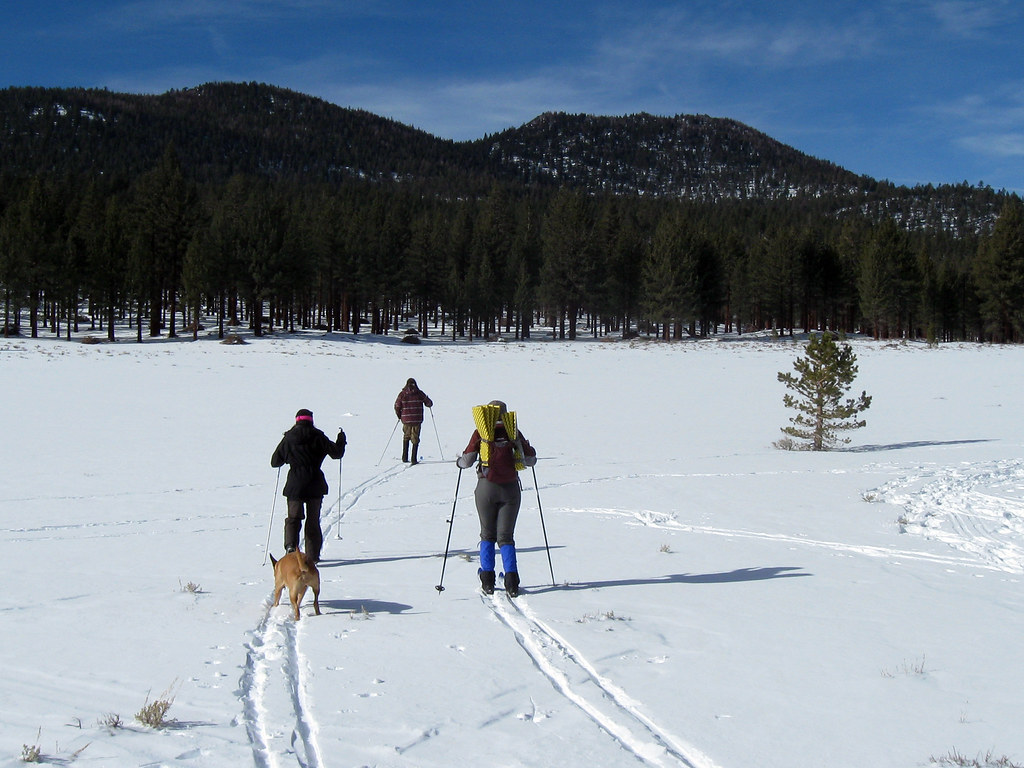
Cross-country skiing takes place on groomed Nordic trails, rolling hills, and forested routes. Skiers move across a variety of terrain, including flat sections, gradual climbs, and gentle descents.
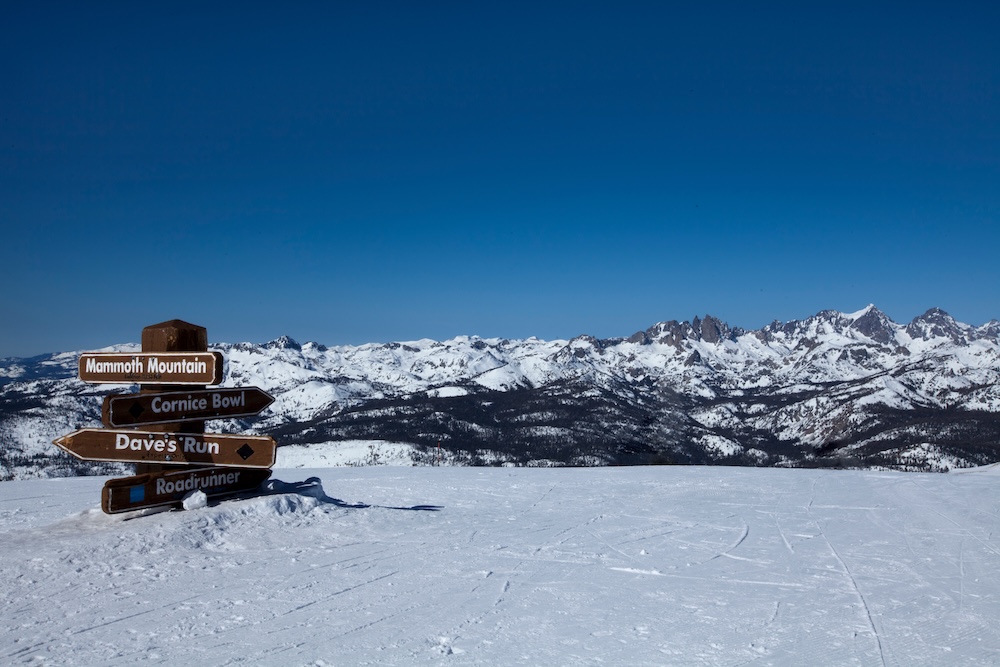
Downhill skiing takes place on designated ski runs and mountain slopes. Skiers ride a chairlift or gondola uphill before skiing back down.
Speed
Downhill skiing is significantly faster because gravity provides the power. Cross-country skiing is slower and more controlled, relying on momentum generated by the skier.
Equipment
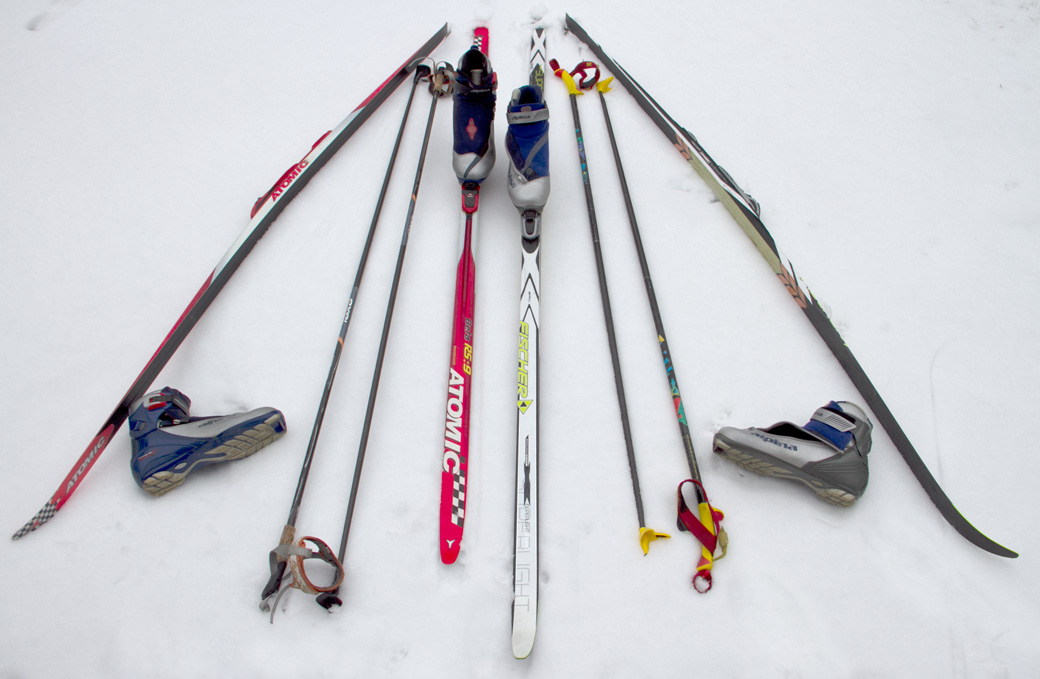
Cross-country skis are narrower, lighter, and longer for efficient gliding. Downhill skis are wider, heavier, and designed for stability and turning performance at higher speeds.
Difficulty to Learn
Many beginners find cross-country skiing easier to learn because the motion feels similar to walking or hiking. Downhill skiing generally has a steeper technical learning curve since skiers must learn to turn, stop, and control their speed on varying terrain.
Fitness Demand
Cross-country skiing provides an endurance-focused, full-body workout that keeps you moving continuously. Downhill skiing emphasizes lower-body strength, balance, coordination, and short bursts of intense effort.
Injury Risk
Cross-country skiing is generally considered lower risk because it takes place at slower speeds and on gentler terrain. Downhill skiing carries a greater risk of injury due to higher speeds, steeper slopes, and more technical terrain.
Typical Cost
Cross-country skiing is often the more affordable option because it doesn't require lift tickets and usually involves lower rental costs. Downhill skiing usually includes lift tickets or passes and more expensive equipment.
Cross-Country Skiing Is Best For:
- Fitness-focused travelers
- Scenic winter exploration
- Budget-conscious adventurers
- Low-impact exercise
Downhill Skiing Is Best For:
- Thrill seekers
- Resort vacations
- Families
- Skiers looking to develop technical skills.
What's the Difference Between Cross-Country and Downhill Skiing?
Both are called skiing, but when you look closer, you’ll see they’re actually very different sports.
Terrain
The name says it all. Downhill skiing is designed for skiing down the side of a mountain. Cross-country skiing carries you across a variety of terrain, including flat surfaces, rolling terrain, and moderate climbs and descents.
Speed
Downhill skiing uses gravity to create a fast-paced, adrenaline-filled experience. Cross-country skiing relies on the skier's momentum, making it a slower, more endurance-oriented activity.
Equipment
One of the biggest differences between the sports is how the skis attach to the boots. Downhill skis secure the entire boot and heel. Cross-country skis attach only at the toe, allowing the heel to lift naturally while skiing.
Learning Curve
It's no surprise that skiing down a mountain requires practice. Downhill skiing takes time to master because skiers must learn to turn, stop, navigate chairlift etiquette, and control speed. Cross-country skiing generally has a gentler learning curve. While physical fitness helps, most beginners can become comfortable after a short lesson.
History: Nordic vs. Alpine Skiing
Cross-country skiing originated thousands of years ago in Scandinavia as a practical method of winter transportation. Because of those origins, cross-country skiing is also called Nordic skiing. Downhill skiing developed much later and became popular in the European Alps. That's why downhill skiing is also called Alpine skiing.
In simple terms:
- Nordic skiing = Cross-country skiing
- Alpine skiing = Downhill skiing
You'll often see these terms used interchangeably when comparing alpine skiing vs. cross-country skiing or alpine skiing vs. Nordic skiing.
Gear: What's Different (and Can You Share It?)
If you already have downhill skis, you can’t just use them on a Nordic trail. Each type of skiing needs its own special gear.
Skis
Cross-Country Skis
Cross-country skis are:
- Longer
- Narrower
- Lighter
- Designed with a specialized camber that improves glide efficiency
Downhill Skis
Downhill skis are:
- Wider
- Heavier
- Built for stability and turning
- Designed to handle higher speeds and varied snow conditions
Boots and Bindings
The binding system is one of the most important differences.
Cross-Country Boots and Bindings
Cross-country bindings attach only at the toe, allowing the heel to lift freely with each stride.
Downhill Boots and Bindings
Downhill bindings lock both the toe and heel in place to maximize control and power transfer on descents.
Ski Poles
Cross-country ski poles are generally longer because they're used as part of the skier's propulsion system. Downhill ski poles are shorter and primarily help with balance, timing, and rhythm while turning.
Outerwear
Downhill skiers usually need more protective, insulated outerwear because they spend time riding lifts and are often exposed to stronger winds. Cross-country skiers generate more body heat through continuous movement and often prefer lightweight, breathable layers.
Helmet
A helmet is strongly recommended for downhill skiing due to speed, terrain, and possible collisions. Cross-country skiing carries a lower risk of high-impact crashes, so helmets are less common on groomed Nordic trails.
Can You Use Downhill Skis or Boots for Cross-Country Skiing?
No, you can’t. Downhill skis are heavier and wider than cross-country skis, and downhill boots are too rigid for the natural movement required in Nordic skiing. The fixed-heel binding system also prevents the stride needed to ski efficiently on cross-country trails.
Which Is Harder: Cross-Country or Downhill Skiing?
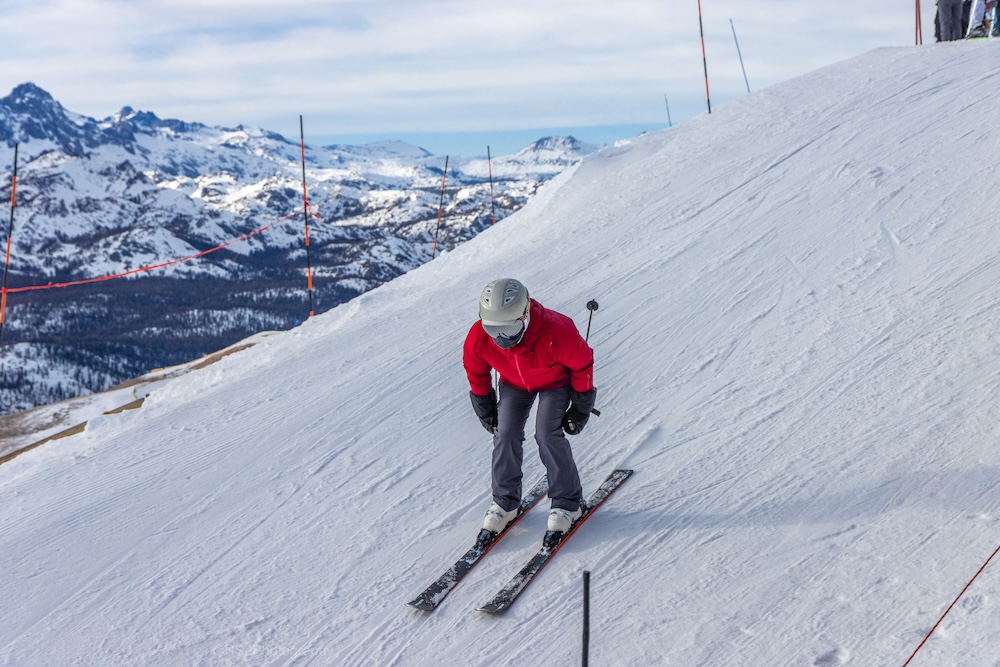
It depends on what you mean by “hard.” Most people find downhill skiing more difficult to learn because it requires a wider range of technical skills.
Downhill Skiing Beginners must learn:
- Turning
- Stopping
- Speed management
- Chairlift procedures
- Terrain awareness
The higher speeds also increase the consequences of mistakes.
Cross-Country Skiing Is Physically Harder
Cross-country skiing is often more demanding from an endurance perspective because there is no lift doing the work for you. Every mile traveled requires your own effort, making it one of the best cardiovascular workouts in winter sports.
Which Is Easier?
Cross-country skiing is generally easier for beginners to learn, while downhill skiing is harder to master. Most people can start moving comfortably on cross-country skis after a short lesson because the technique is intuitive and the terrain is less intimidating. Downhill skiing requires more technical skills, including turning, stopping, and speed control. However, cross-country skiing demands more endurance, so while it's easier to learn, it can be more physically challenging over time.
Is Cross-Country Skiing Safer Than Downhill Skiing?
Generally, yes. Cross-country skiing takes place at lower speeds and on gentler terrain, lessening the likelihood of high-impact falls. Downhill skiing carries a higher injury risk because of speed, steepness, and crowded resort environments.
Still, both sports are safe if you take the right precautions and prepare properly.
Which Gives a Better Workout?
Both forms of skiing offer exceptional health benefits, but they challenge the body differently. Downhill skiing needs considerable activation of the legs, glutes, and core to maintain balance, stability, and control. The effort typically comes in short, intense bursts that resemble interval training.
Cross-country skiing provides a full-body workout that engages the shoulders, arms, back, core, glutes, calves, and leg muscles continuously throughout the activity. If you're wondering about the physical benefits of cross-country skiing compared to downhill skiing, cross-country skiing generally burns more calories and provides greater aerobic conditioning while remaining relatively low-impact on the joints.
Which Is More Affordable?
For most visitors, cross-country skiing is the more budget-friendly option.
Downhill Skiing Often Includes:
- Lift tickets or season passes.
- Resort access fees
- More expensive equipment and rentals
Cross-Country Skiing Often Includes:
- Lower-cost rentals
- Trail passes or free access routes.
- Less expensive beginner equipment
If you want an affordable way to try winter sports, cross-country skiing is a great place to start.
Where to Try Both in Mammoth Lakes
One of the best parts of visiting Mammoth is that you don’t have to pick just one style of skiing, and you don’t have to pick one mountain to ski on.
Downhill Skiing
Mammoth Mountain
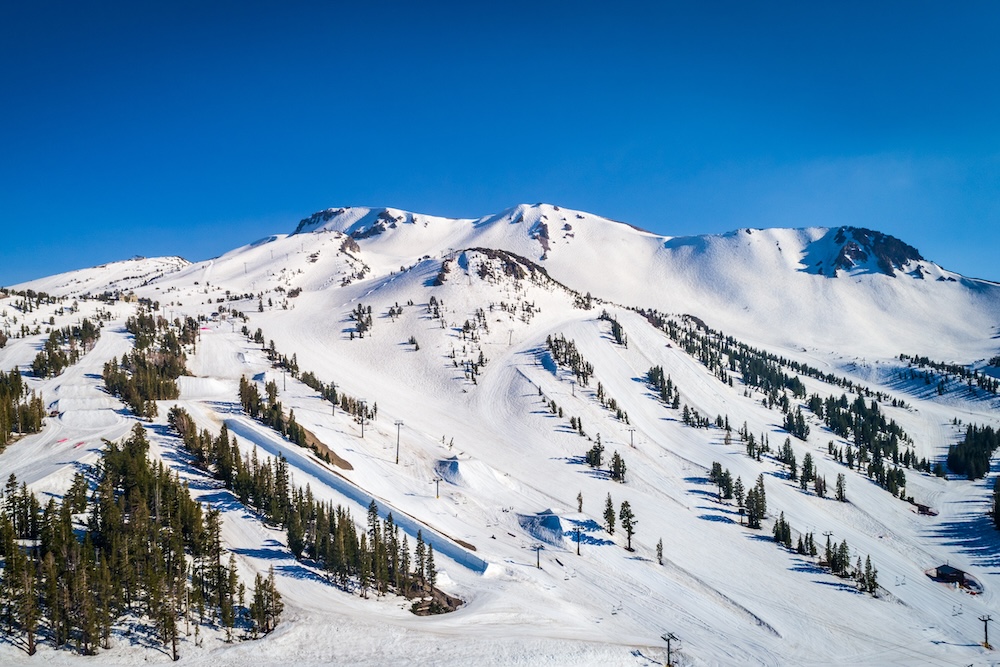
When it comes to downhill skiing, Mammoth Mountain is the area's flagship destination. With a summit elevation of 11,053 feet, approximately 3,500 skiable acres, and one of the longest ski seasons in North America, it's easy to see why skiers travel from around the world to experience its terrain. Whether you're learning on beginner-friendly groomers, cruising intermediate runs, or tackling expert terrain, Mammoth Mountain offers a wide variety of options for every skill level throughout the winter season.
June Mountain
For a more relaxed skiing experience, June Mountain is a favorite among families and beginners. Known for its laid-back atmosphere, shorter lift lines, and approachable terrain, June Mountain provides a welcoming alternative to the larger resort experience while still offering stunning Sierra views and plenty of room to explore.
Cross-Country Skiing
Tamarack Cross Country Ski Center
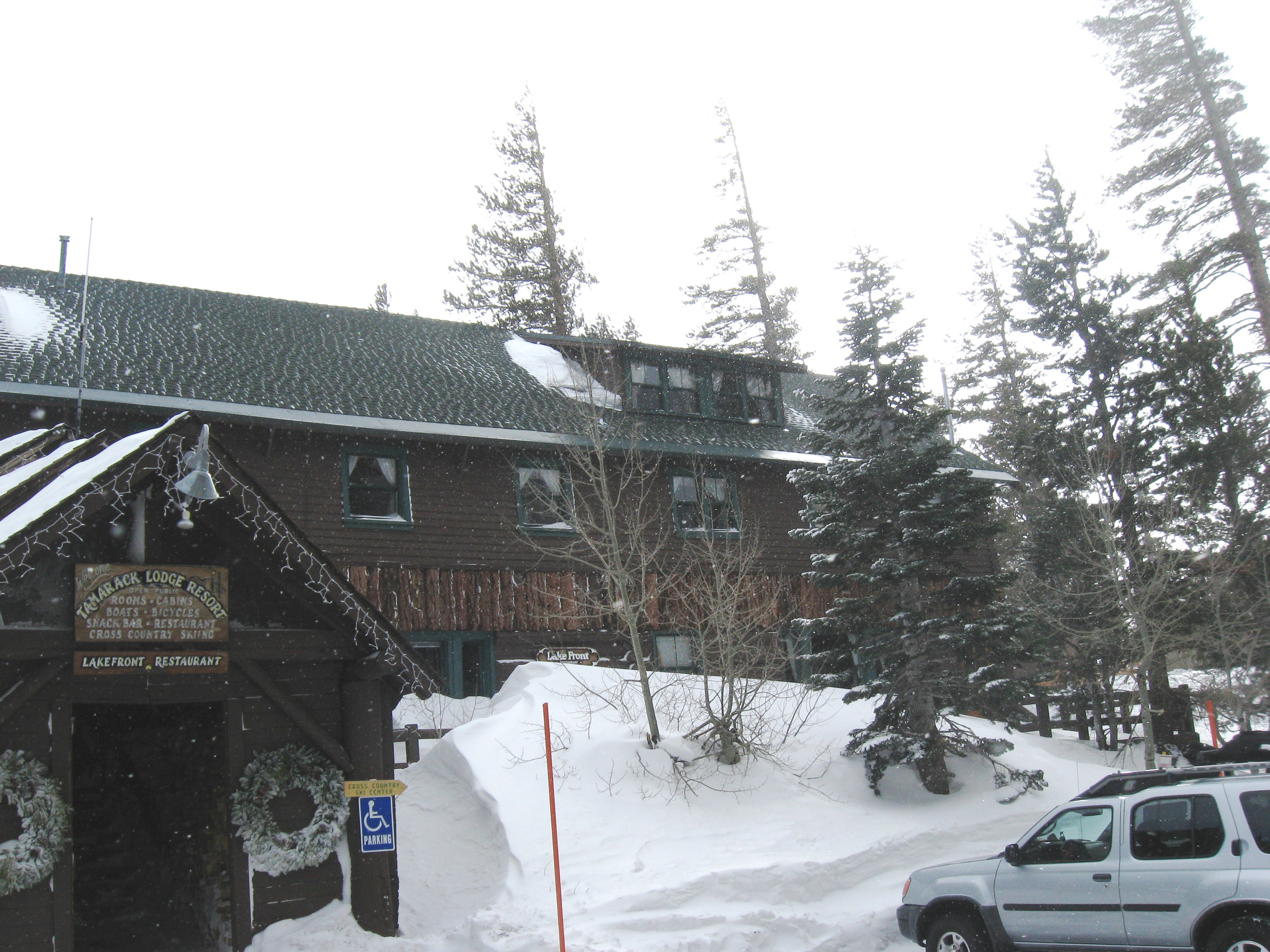
Located near Twin Lakes, Tamarack Cross Country Ski Center offers approximately 19 miles of groomed Nordic trails plus equipment rentals and local trail knowledge.
Minaret Vista
One of the area's most scenic Nordic routes, with exceptional views of Mammoth's iconic mountain scenery.
Shady Rest
The groomed trails around Shady Rest provide easy and pleasant skiing for a range of abilities. Combined, Mammoth offers more than 140 miles of cross-country ski trails and winter recreation routes.
How to Prepare and Train Before Your Trip
Whether you want to ski downhill, cross-country, or both, a bit of preparation really helps.
Build Endurance
Even active visitors notice the effects of Mammoth's elevation. Walking, running, hiking, cycling, and swimming are excellent ways to prepare.
Practice Balance
Activities like skating, rollerblading, and balance exercises can improve stability on skis.
Improve Flexibility
Mobility and flexibility help improve performance while lowering the risk of injury. Focus on the hips, ankles, calves, and lower back.
Prepare for Altitude
Hydrate before you arrive, get plenty of sleep, and allow yourself time to adjust to the elevation and high altitude.
Get Your Gear Ready
Inspect your equipment before your trip or research rental options in advance.
Which Kind of Skiing Will You Choose?

Featured Rental: Mammoth Ski & Racquet Club #076
Whether you love the thrill of fresh powder and chairlifts or prefer quiet forest trails and endurance, you can’t go wrong.
Downhill skiing delivers speed, excitement, and iconic mountain experiences. Cross-country skiing offers a peaceful way to explore winter landscapes whilst enjoying one of the best full-body workouts available. Many visitors find that trying both types of skiing on the same Mammoth trip is the best way to go.
Ready to plan your ski trip? Book a Mammoth vacation rental to stay close to the slopes and enjoy easy access to the area’s best winter activities.
Browse Mammoth Vacation Rentals
Frequently Asked Questions
What is cross-country skiing also called?
Cross-country skiing is also called Nordic skiing. The name comes from the Nordic countries, where the sport originated as a practical method of winter transportation. You'll also commonly see it abbreviated as XC skiing.
Is alpine skiing the same as downhill skiing?
Yes. Alpine skiing is another name for downhill skiing. Both terms refer to skiing down mountain slopes using fixed-heel bindings and lift-served terrain.
What are downhill skis used for?
Downhill skis are designed for skiing on mountain terrain and resort runs. They provide the stability, edge control, and turning performance needed for higher speeds and changing snow conditions.
Can you use downhill skis for cross-country skiing?
No. Downhill skis are too heavy and use a fixed-heel binding system that prevents the natural stride required for cross-country skiing.
Is cross-country skiing harder than downhill skiing?
Cross-country skiing is generally easier to learn but more physically demanding. Downhill skiing has a steeper technical learning curve and typically takes longer to master.