
Mammoth Lakes wildflower season runs from about April through August and moves uphill with the snowmelt, starting with desert blooms along Highway 395, reaching meadows around town in June, and peaking in the high country in July and August. This guide covers bloom timing by elevation, the best wildflower hikes and drives near town, and 16 Eastern Sierra species to look for. If you're still choosing dates, our guide to things to do in Mammoth Lakes in spring explains what's open in the shoulder season.
When Wildflowers Bloom in Mammoth Lakes: Bloom Timing by Elevation
Wildflowers bloom first along Highway 395 in spring, reach town-level meadows in June, and climb to 9,000–11,000 feet by July and August, with the exact weeks shifting each year with snowpack. Big winters push the bloom later and make it more dramatic, while dry years bring an earlier, thinner show. If you think you've missed it, go higher. The Mammoth Lakes Trail System and the Mammoth Lakes Welcome Center post current conditions.
Late March to May: Desert Blooms Along Highway 395 (5,000–7,000 ft)
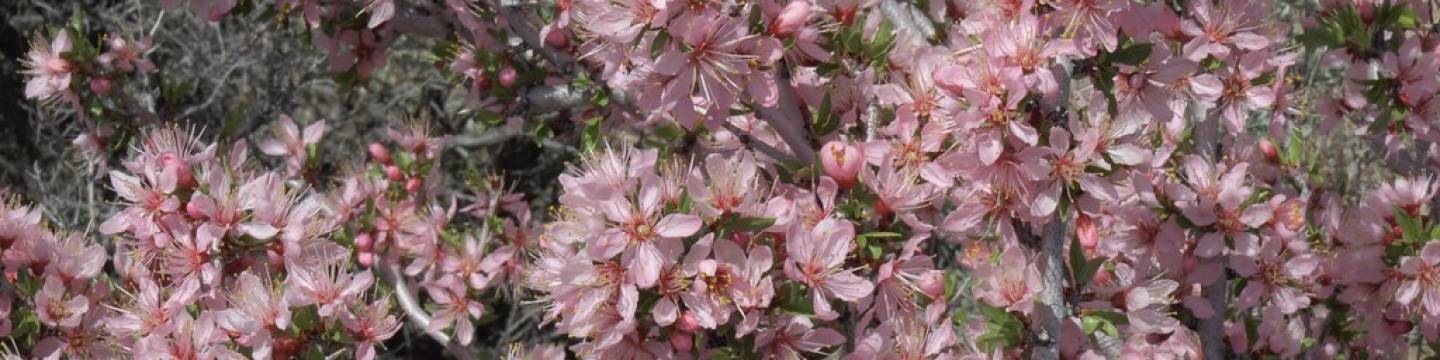
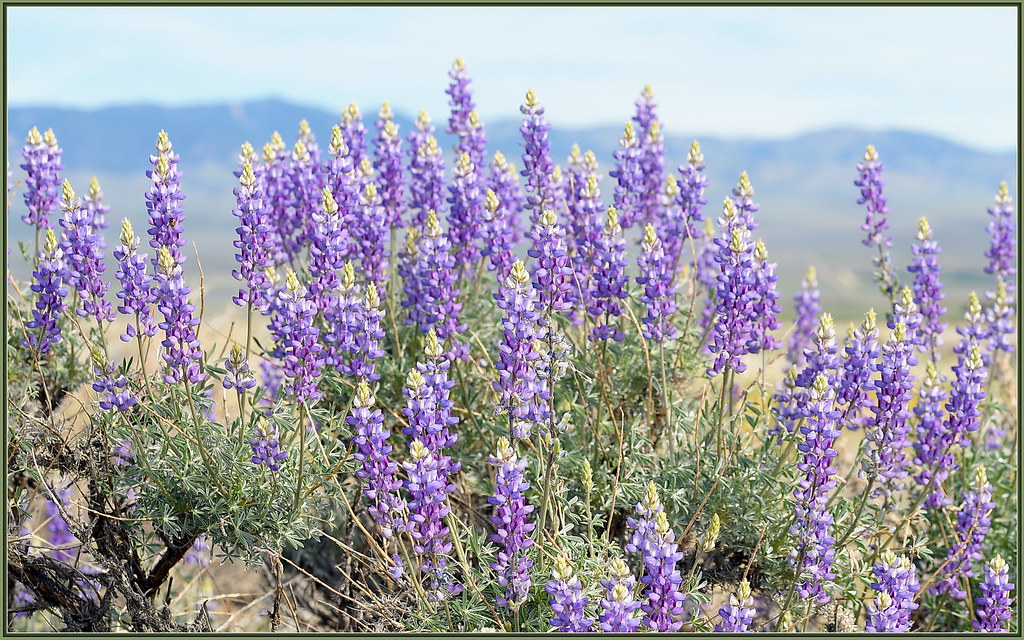
The season opens in the sagebrush along Highway 395, where desert peach, bitterbrush, and grape soda lupine bloom from roughly late March through May. You'll see them from the car on the drive up through the Owens Valley and over Sherwin Grade. Spring skiers often catch this bloom on the way into town.
June: Meadows Around Town, Convict Lake, and McGee Creek (7,000–8,500 ft)
In June, the bloom reaches Snowcreek Meadow, Kerry Meadow, the Sherwin Lakes Trail, Convict Lake, and McGee Creek, filling them with paintbrush, lupine, mule's ears, and columbine. The Mammoth Lakes Trail System notes that Sherwin Lakes is one of the first local trails to melt out and bloom.
July to August: Lakes Basin, Sky Meadows, and Little Lakes Valley (8,500–11,000 ft)
Peak high-country bloom arrives in July and August, when larkspur, tiger lilies, and monkeyflowers fill the Mammoth Lakes Basin, Sky Meadows, and Rock Creek's Little Lakes Valley. Late-July posts in Eastern Sierra wildflower groups often put the heaviest color between about 9,500 and 10,300 feet. For high-elevation flowers without the climb, take the scenic gondola ride to Mammoth Mountain's 11,053-foot summit and hike down once the mountain trails open, typically in late June.
Best Wildflower Hikes and Scenic Drives Near Mammoth Lakes
The best wildflower spots near Mammoth Lakes range from flat meadow walks in town to the climb to Sky Meadows and scenic drives up Rock Creek and through the Bridgeport Valley, and each one peaks at a different point in the season. For more local trails, see our guide to hiking in Mammoth Lakes.
Sky Meadows via Emerald Lake: Mammoth's Signature Wildflower Hike
Sky Meadows is the top wildflower hike in the Lakes Basin. The roughly 4-mile round trip starts at the Coldwater Campground trailhead and climbs past Emerald Lake to a meadow below the Mammoth Crest at about 10,000 feet, where larkspur, paintbrush, and columbine usually peak from mid-July into August. Reddit hikers rate the mosquitoes around Emerald Lake among the worst in the basin, so pack a head net. The trail also tops out high, so read up on acclimating to Mammoth's high altitude first.
Easy Wildflower Walks in Town: Snowcreek Meadow, Kerry Meadow, and Sherwin Lakes
Snowcreek Meadow, the flat 1.6-mile Hidden Lake and Kerry Meadow loop, and the first stretch of the Sherwin Lakes Trail are the easiest June wildflower walks, and all three start minutes from town. Kerry Meadow is a family favorite, and our tips for hiking with kids in Mammoth Lakes include a trail-bingo game that works well for spotting flowers.
McGee Creek and Rock Creek: Wildflower Canyons South of Town
McGee Creek and Rock Creek, 20 to 30 minutes south of town, are two of the Eastern Sierra's most reliable wildflower canyons. McGee's meadows fill with paintbrush, lupine, scarlet gilia, and mule's ears in June and July. A local shop's trip report notes the gravel road is passable in a sedan and the mosquitoes are heavy in the lower meadows in late June. Rock Creek Road climbs from about 7,000 to 10,200 feet, so one drive passes several bloom stages before reaching Little Lakes Valley. You can also see McGee by horse with one of the horseback riding outfitters near Mammoth, or push on to Steelhead Lake, one of our moderate to hard hikes in Mammoth Lakes.
Agnew Meadows Wildflower Loop in Reds Meadow Valley
The Agnew Meadows Wildflower Loop is a gentle 0.6-mile meadow path in the Reds Meadow Valley that usually blooms from July into early September. In summer, you normally reach it on the mandatory shuttle that also serves Devils Postpile National Monument. Reds Meadow Road is being reconstructed, and the trailhead has been listed as having limited access, so check the Inyo National Forest trailhead page before planning around it.
Bridgeport Valley and the Bodie Hills: Wild Iris Fields North of Town
For a scenic wildflower drive, head about an hour north on Highway 395 to the Bridgeport Valley, where wild iris and lupine fill the pastures from mid- to late June and the nearby Bodie Hills bloom a little later. Combine the drive with Bodie State Historic Park or a stop at Mono Lake's tufa towers.
Eastern Sierra Wildflowers to Know: 16 Species by Habitat
These 16 wildflowers are among the most common around Mammoth Lakes, grouped by where they grow so you know what to look for on each trail. Bloom windows are typical ranges that shift with elevation and snowpack.
High-Desert Wildflowers: Desert Peach, Bitterbrush, Lupine, Mule's Ears, and Rabbitbrush
The sagebrush flats along Highway 395 hold both the earliest bloomers, in spring, and the last, in fall.
-
Desert Peach (Prunus andersonii): White to pale pink blossoms cover this shrub from March to May. Its tiny peaches and leaves feed jackrabbits and Mammoth's mule deer.
-
Antelope Bitterbrush (Purshia tridentata): Small pale-yellow, rose-like flowers in spring. An important food for deer and Sierra bighorn sheep.
-
Grape Soda Lupine (Lupinus excubitus): Dense purple spikes in spring that really do smell like grape soda. The leaves are toxic, so deer avoid it.
-
Woolly Mule's Ears (Wyethia mollis): Yellow sunflower-like blooms over fuzzy leaves shaped like a mule's ears, from late spring into early summer, and often among the first plants back after a wildfire.
-
Rubber Rabbitbrush (Ericameria nauseosa): Feathery yellow blooms from August into October. It has narrower leaves and a milder scent than sagebrush, and its sap contains natural rubber.
Meadow and Streamside Wildflowers: Paintbrush, Columbine, Tiger Lily, Larkspur, Monkeyflower, Bog Orchid, and Iris
Wet meadows and creek banks produce the showiest blooms, starting in June at town elevation and lasting into August higher up.
-
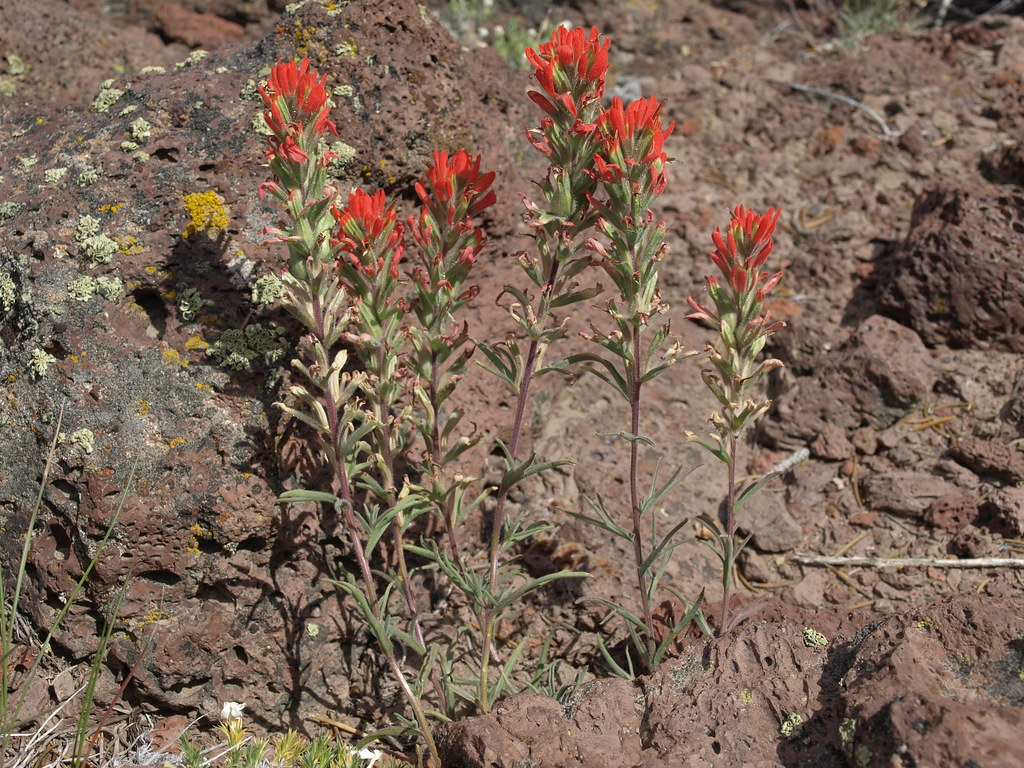
Giant Red Paintbrush (Castilleja miniata): Red bracts (modified leaves) that look like a brush dipped in paint, from May to September. It's partly parasitic, drawing nutrients from the roots of nearby grasses.
-
Crimson Columbine (Aquilegia formosa): Nodding red-and-yellow spurred flowers along streams all summer that attract hummingbirds. Everything but the nectar is toxic.
-
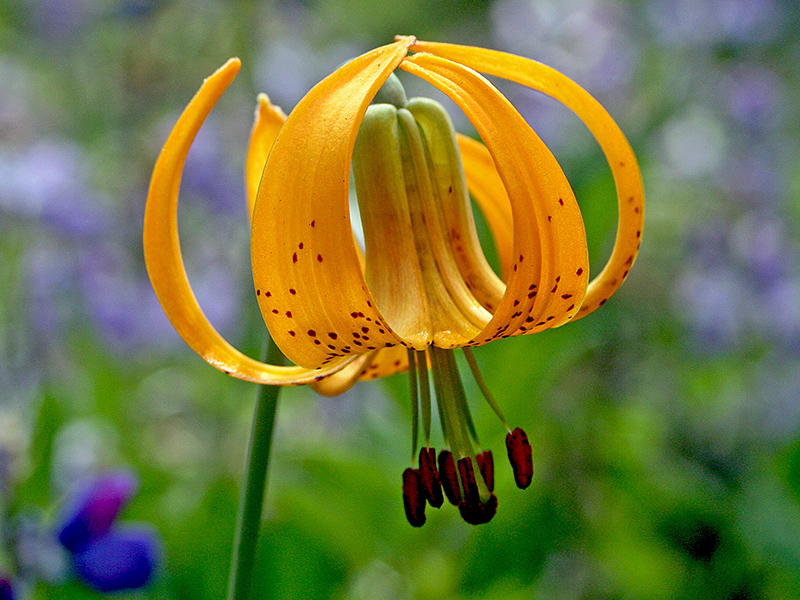
Sierra Tiger Lily (Lilium parvum): Orange bells with maroon spots in marshy spots from June to August.
-
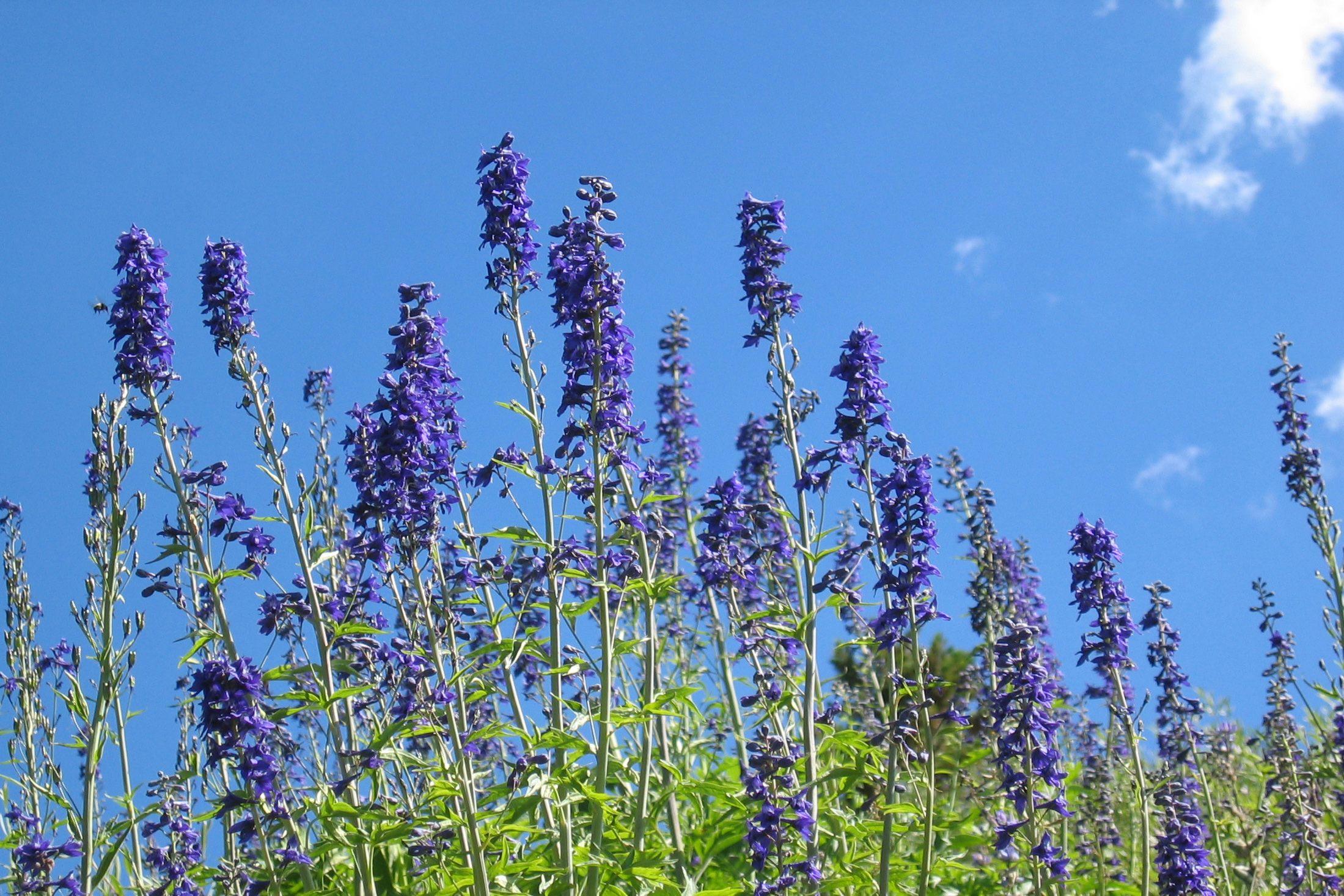
Mountain Larkspur (Delphinium glaucum): Deep-purple spires that can grow taller than the hikers passing them, common on the Sky Meadows trail. It's highly toxic, so don't touch.
-
Monkeyflowers (Erythranthe guttata and Diplacus torreyi): Yellow common monkeyflower and pink Torrey's monkeyflower line high stream banks across the Lakes Basin.
-
White Bog Orchid (Platanthera dilatata var. leucostachys): A tall stalk of clove-scented white flowers in the wettest spots, including the June Lake Loop and Lundy Lake.
-
Rocky Mountain Iris (Iris missouriensis): Blue-to-purple papery flowers with short bloom windows in late spring and early summer, best seen in the Bridgeport Valley.
Wildflowers of Forest Openings and Rocky Slopes: Fireweed, Scarlet Gilia, Mountain Pride, and Pennyroyal
Sunny slopes, granite outcrops, and old burn scars hold wildflowers that are easy to walk past if you don't know them.
-
Fireweed (Chamerion angustifolium): Pink spikes up to 6 feet tall from June to September, named for how quickly it returns after wildfires.
-
Scarlet Gilia (Ipomopsis aggregata): Red, tube-shaped "skyrocket" flowers built for hummingbirds, from May to July.
-
Mountain Pride (Penstemon newberryi): Low mats of hot-pink, funnel-shaped flowers on sunny Lakes Basin granite in July and August.
-
Sierra Pennyroyal (Monardella linoides ssp. sierrae): A small silvery mint with pale lavender flowers on granite slopes from June to September. It smells faintly minty up close.
Tips for Enjoying Mammoth Lakes Wildflowers: Mosquitoes, Altitude, and Leave No Trace
The best wildflower outings in Mammoth start early, with bug protection and extra layers, and stay on the trail. As one forum regular put it: "It's June in the Sierra. There will be skeeters."
-
Plan for mosquitoes. Hikers recommend permethrin-treated clothing and picaridin repellent. Take breaks on windy, exposed ridges, where the bugs thin out.
-
Start early. You'll get softer light for photos, quieter trails, and time to get down before the afternoon thunderstorms common in summer.
-
Pack layers. Our list of what to pack for a spring trip to Mammoth Lakes covers the essentials, and bring allergy medication if pollen bothers you.
-
Leave the flowers. Stay on the trail, don't pick anything, and keep dogs leashed. Larkspur and lupine are toxic to pets.
-
Share what you find. Upload photos to iNaturalist to help local scientists track plant health, and check Inyo National Forest and Bishop Visitor Center bloom reports before you go.
Spring Wildflowers in Mammoth Lakes: Frequently Asked Questions
Here are quick answers to the most common questions about wildflower timing, trails, species, and season length in Mammoth Lakes.
When do wildflowers bloom in Mammoth Lakes?
Wildflowers in Mammoth Lakes bloom from about April through August. Town-level meadows usually peak in June, and the high country peaks in July and August.
Where are the best wildflower hikes in Mammoth Lakes?
The best wildflower hikes are Sky Meadows via Emerald Lake, McGee Creek, Little Lakes Valley, and the Agnew Meadows loop when it's accessible. For easy walks, try Snowcreek Meadow, Kerry Meadow, and Sherwin Lakes.
What wildflowers grow in the Eastern Sierra?
Common Eastern Sierra wildflowers include paintbrush, columbine, larkspur, tiger lily, lupine, mule's ears, fireweed, monkeyflowers, scarlet gilia, and Rocky Mountain iris, plus desert peach and bitterbrush along Highway 395.
How long does wildflower season last in Mammoth Lakes?
Wildflower season in the Mammoth area lasts about four to five months as the bloom climbs uphill, but any single meadow usually peaks for only two to three weeks.
Where to Stay for a Mammoth Lakes Wildflower Trip
Staying several days in Mammoth Lakes lets you follow the bloom uphill and work around afternoon storms. Start with our Mammoth vacation rentals, choose downtown Mammoth rentals near Snowcreek Meadow and the Sherwin Lakes trailhead, bring your dog along with pet-friendly Mammoth rentals, or soak tired legs in a rental with a private hot tub after Sky Meadows. To plan around more than the flowers, see our roundup of summer events in Mammoth or check the Mammoth Lakes events calendar.