
It’s that time of year again when the black bears of the Eastern Sierra start waking up with grumbling tummies and curious cubs. And that means that around Mammoth, we start throwing around the phrase “be bear aware” like the latest Gen Z Tiktok slang. But what does bear awareness actually mean?
Now’s the time to learn all about cohabitating safely with our wild neighbors!
What does it mean to be “bear aware?”
For decades, nature conservationists have warned that contact with bears is dangerous for both humans and the bears, themselves. So, being “bear aware” is a set of guidelines that allow for bears to live their natural, wild lifestyle with as limited contact and intervention from humans as possible.
Bear awareness practices will look different depending on what kind of bear species you’re dealing with. For instance, the Alaska Department of Fish and Game recommends that campers carry portable electric fences to keep them safe from brown bears while they sleep. Here in Mammoth, our black bears aren’t nearly as aggressive, so our bear awareness tips look quite different. Let’s take a look:
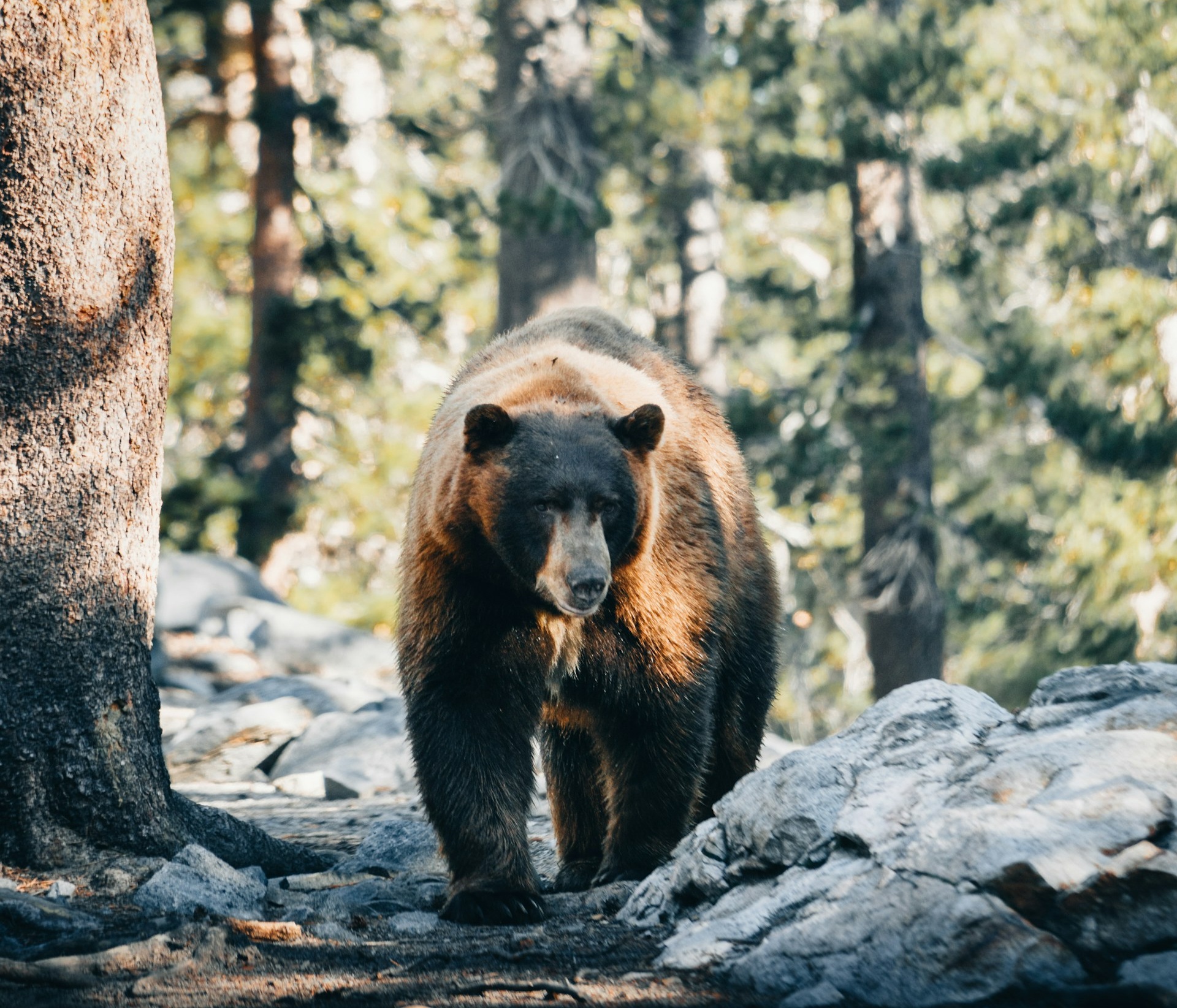
Basic “bear awareness practices” for Mammoth Lakes
Don’t leave anything edible or with a fragrance in your car
It’s believed that bears have an even better sense of smell than Bloodhounds, so it’s incredibly important not to leave anything in your car that might pique their interest. Whether it’s an empty granola bar wrapper or a tube of scented chapstick, a bear might be tempted to rip the door right off your car in order to investigate.
No matter how tired you might be after a long day of enjoying Mammoth, make sure to do a thorough sweep of your car before going back to your condo for the night.
Close all trash cans and dumpsters
You’ve probably noticed that the dumpsters around Mammoth are tricky contraptions. You might even call them annoying. They feature heavy lids and locking devices that require a bit of effort to open and close.
But for us locals who remember the days before bear-proof dumpsters (when there was always a good chance of coming face-to-face with a dumpster-diving bear), we know how important the extra effort is for bear safety. Even if you’re not throwing anything away but you see a dumpster open, do a solid and take a quick peep inside before closing the lid.
Keep your dog on a leash
Dogs and wildlife don’t make a good combination in general. But this is especially true when the wildlife in question is much bigger and stronger than your canine. True, black bears will typically run away from dogs, preferring to scramble up a tree than deal with the annoyance of a strange yapping animal. But, that’s not the case if your dog picks a fight with a momma bear or corners the bear in an area with no exit route.
In all of the above scenarios, of course, an unleashed dog puts the bear under unnecessary stress.
Do not approach a bear under any circumstances
No one is denying that bears are cute. They look absolutely huggable. But bears are not friends. They don’t want you to come closer. They don’t want to be in your selfie.
And it’s not only a matter of putting yourself in danger. The fact is, the more that humans approach them, bears can lose their natural suspicion towards people. Without that natural fear, they can become more bold about breaking into campsites, cars, and even homes.
So, protect yourself and protect the bears by leaving them alone.
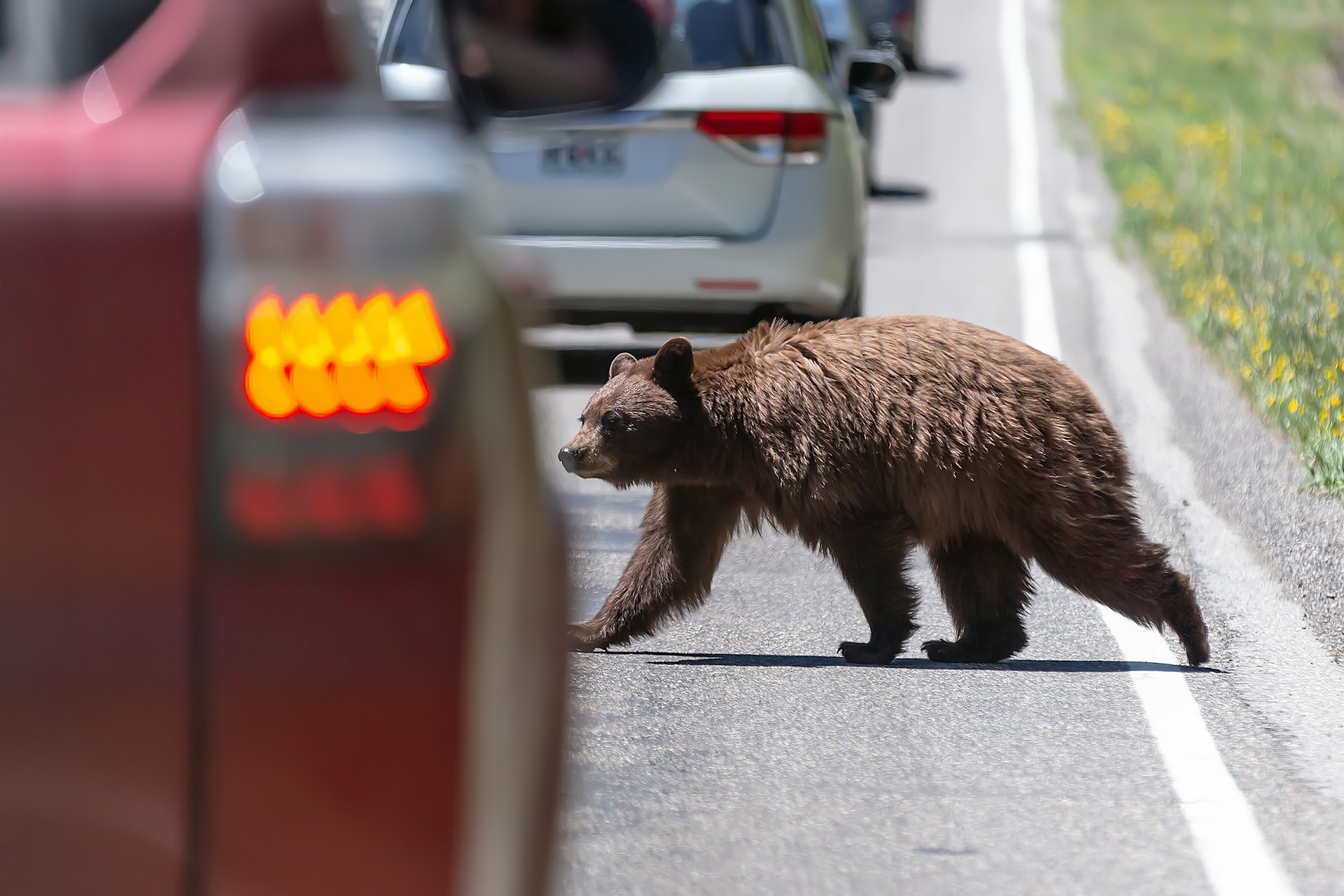
No matter what you drive, drive slowly
With so much wildlife and recreation here in Mammoth Lakes, we always recommend driving slowly and safely while in town, regardless of if you’re in a car, on a 4x4, or riding a mountain bike. And remember that even if you see one bear safely cross the road, there could be cubs in tow. So, give it a few extra moments just to make sure!
Make noise when coming around corners on trails
Bears are just one of the many wild animals that utilize man-made trails to get to where they want to go. It’s just more efficient that way! And usually, their incredible sense of smell and hearing means that they can sense you coming before you ever actually cross paths.
But, there are a few conditions in which you might startle a bear on a trail, such as if you’re moving fast while mountain biking or the wind is carrying your scent in a different direction or if you’re just very sneaky.
You can avoid surprises by talking, singing, whistling, or clapping your hands while rounding blind corners.
What should you do if you come across a bear in the wild?
Being bear aware is about limiting your interactions with bears, but up here in the mountains, that’s not always possible. So, what should you do if you come face to face with one of our resident black bears?
Don’t panic
Easier said than done, right? But it’s true that one of the best things you can do in a bear encounter is take deep breaths and stay calm. This will allow you to make better decisions.
Don’t run or charge
One defense mechanism that bears have is called a “bluff charge,” in which they will run quickly toward a perceived threat without the intention of attacking. This can be very scary! But, it’s important that you stand your ground. Running away could provoke a chase instinct. And running towards the bear could escalate the situation.
Use a firm, calm voice
Speaking to a bear may seem silly, but there are a few reasons why it’s important. For one, it helps the bear to recognize you as a human and not prey or threat. And two, it can help you feel more in control of the situation. You don’t need to yell or scream, as that could spook the bear even more. Instead, if the bear is relatively far off, use a calm, gentle voice to let the bear know you’re not looking for a fight. If the bear is uncomfortably close, you can use a more firm voice to demand space.
Back away slowly
In many cases, the bear will scamper off into the woods. But in other situations, a bear may hold their ground and wait for you to vacate the area. This might mean that you have to double back on the hiking trail and wait for the bear to mosey along on their way before continuing on your hike.
In very rare circumstance, you may need to fight
As we said before, black bears are not aggressive animals, so attacks on humans are very rare. That being said, a bear that feels cornered or protective over cubs will fight. And in that situation, experts recommend fighting back. You should focus on hitting sensitive areas, like the face.
Frequently asked questions about bears in Mammoth Lakes
How many bears live around Mammoth Lakes?
The number fluctuates from year to year, but there’s usually an estimated 25 to 35 bears living in the forested areas around Mammoth Lakes. In 2025, the California Department of Fish and Wildlife relocated 8 bears that had become habituated to dumpster diving.
What are the most common months to see bears in Mammoth Lakes?
Bears are most active in Mammoth Lakes during the summer and early fall months, between June and October.
Do I need bear spray in Mammoth Lakes?
No, bear spray is not necessary if you’ll be spending the majority of your time in town or in highly populated areas. Bear spray is prohibited in certain areas, such as Yosemite and the John Muir Trail.
What smells are bears most attracted to?
Anything that smells like food will attract a bear. This includes candy wrappers, scented beauty products and toiletries, dog food, sweet beverages, and more.
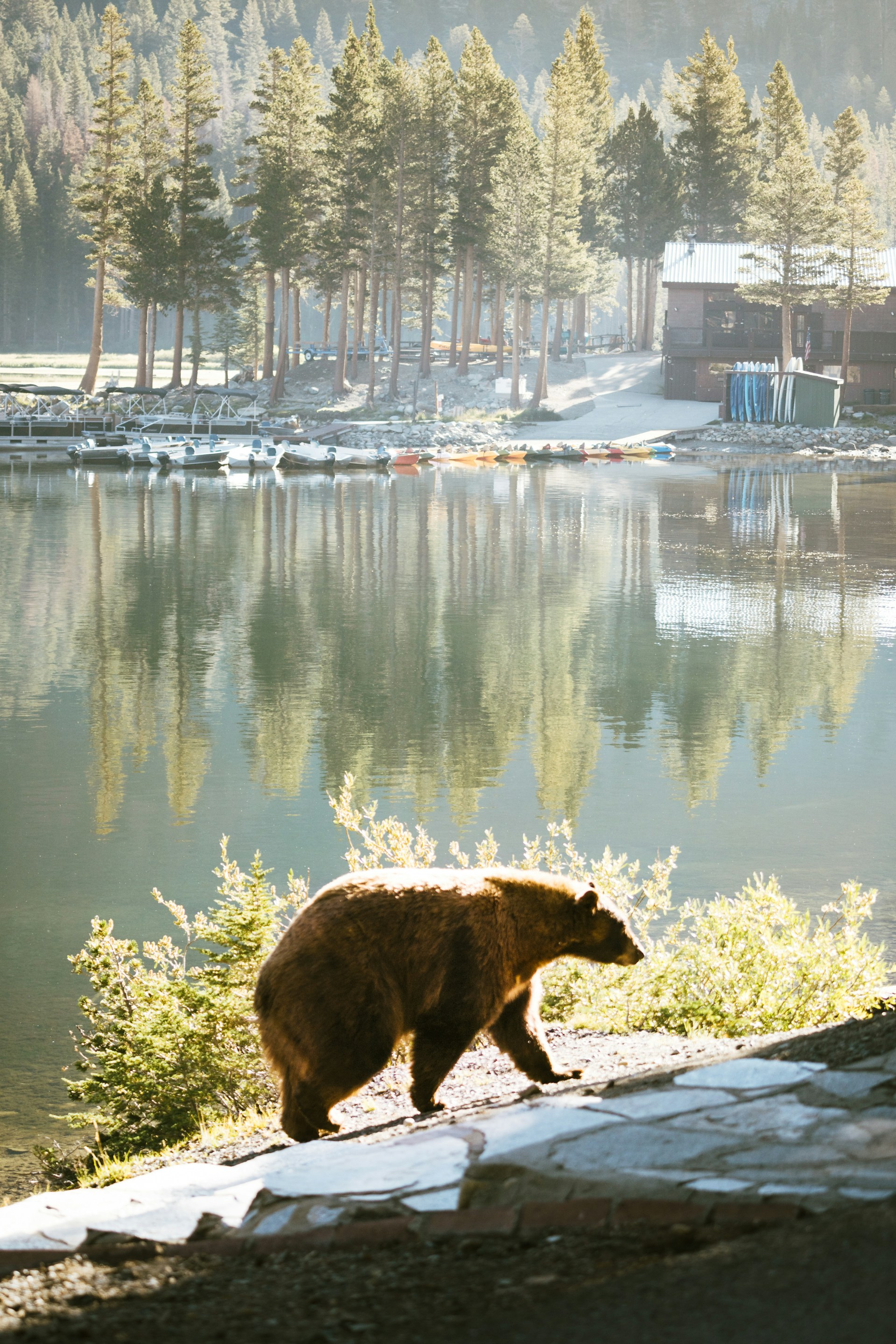
Conclusion: Being “bear aware” means respecting our wild neighbors
Here in Mammoth Lakes, we love our bears…from a respectable distance. In fact, we’d like to have a parasocial relationship with them, in which we admire them from afar and they barely know that we exist. This dynamic is possible when we take the necessary steps to be “bear aware!”
Ready to book your next trip to Mammoth Lakes? Take a look at the condos we have available!